
How to Stop Missing Deadlines: A Practical Guide
Missing deadlines damages trust and creates stress. Learn proven strategies to stay on track and deliver projects on time, every time.
The Real Cost of Missed Deadlines
Every missed deadline chips away at credibility. Clients lose confidence, teams get frustrated, and stress levels spike. But here's the truth: most deadline problems aren't about working harder—they're about working smarter.
Break Projects into Smaller Tasks
Large projects feel overwhelming, which leads to procrastination. Instead of a single "Launch Website" task with a deadline three months out, break it into specific, actionable tasks:
- Design homepage mockup
- Write homepage copy
- Build responsive layout
- Set up contact form
- Test on mobile devices
Each task gets its own deadline. Suddenly, that massive project becomes a series of manageable steps, and you can track real progress.
Set Realistic Due Dates
Optimism is great, but it ruins schedules. When estimating how long something will take, add a buffer. If you think a task needs 3 hours, schedule 4. Unexpected issues always pop up.
In TaskLemon, you can set both start dates and due dates for tasks. This helps you plan when to begin work, not just when it needs to finish.
Use Task Dependencies
Some tasks can't start until others finish. Mark these dependencies clearly. When you know Task B depends on Task A, you naturally prioritize Task A.
This prevents the common problem of starting work only to discover you're waiting on someone else.
Track Time Realistically
TaskLemon shows estimated read times for documentation and lets you add time estimates to tasks. Use this data to improve future estimates. If tasks consistently take longer than planned, adjust your expectations.
Review Progress Daily
Five minutes at the start of each day makes a huge difference. Check your task board, identify anything falling behind, and adjust. Small course corrections prevent major delays.
With TaskLemon's dashboard, you see overdue tasks at a glance. No hunting through lists or spreadsheets—just open the dashboard and know exactly what needs attention.
Communicate Early About Delays
When you realize a deadline is at risk, speak up immediately. The earlier you communicate, the more options you have to adjust scope, get help, or shift resources.
Use task comments in TaskLemon to keep everyone informed. When you update a task's status or flag a problem, the team sees it in real-time.
Building Better Habits
Deadline management is a skill that improves with practice. Start by implementing one or two of these strategies, then add more as they become habit.
The goal isn't perfection—it's progress. Even cutting missed deadlines by half would transform how your team operates and how clients perceive your reliability.

TaskLemon Team
Content author at Task Lemon
Related Articles

Best Task Management Apps for 2026: A Practical Comparison
This guide compares personal and team oriented task management software for developers and growing teams. Review AI features, pricing, free access, and workflow fit before choosing your next task platform.
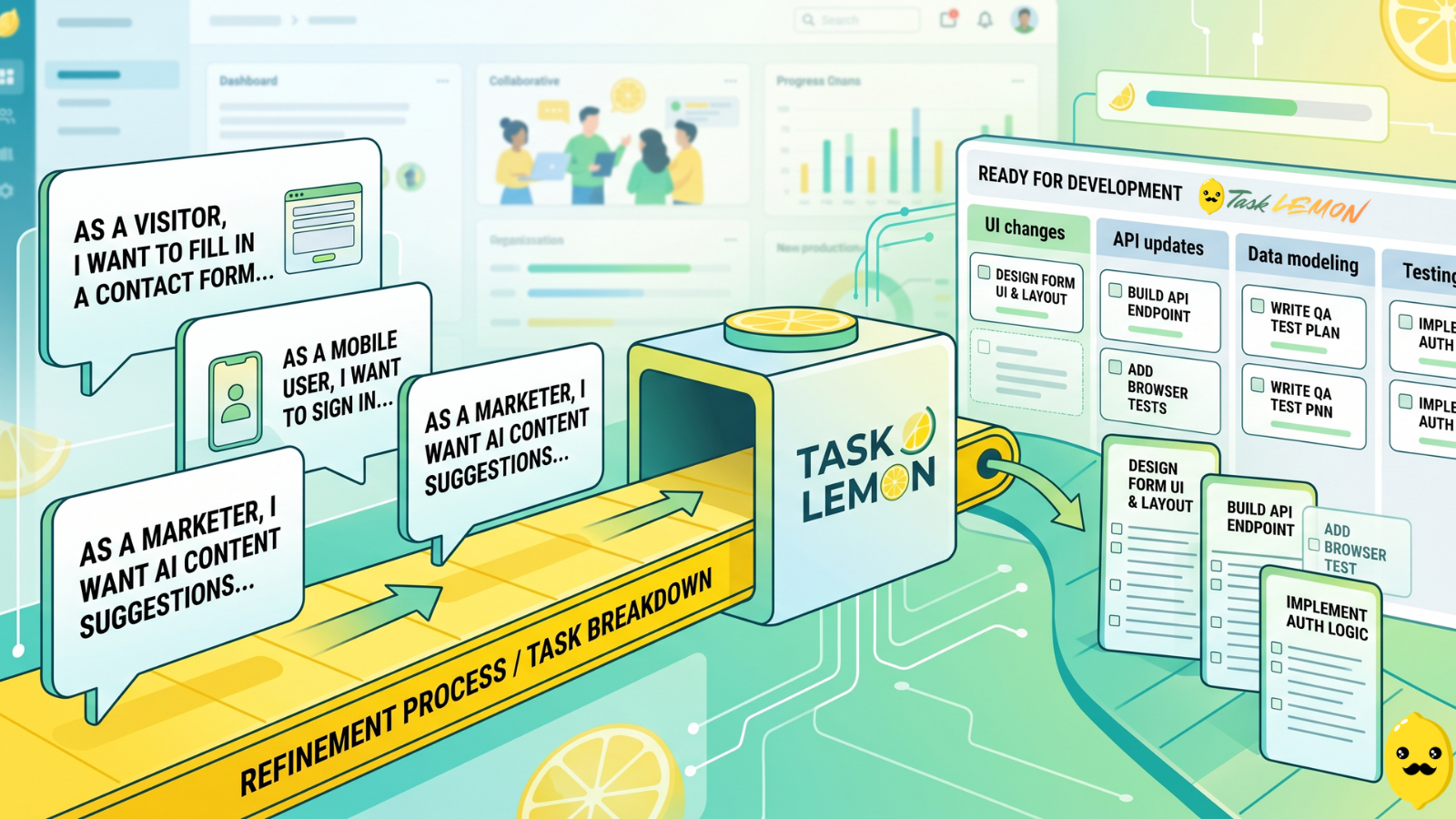
How To Turn User Stories Into Actionable Tasks In Task Lemon
Whether you are a freelancer, an agency, or a cross-functional product team, this guide shows you a repeatable, jargon-free way to take any user story and turn it into real, trackable tasks. Read on to discover how to set up your workflow, slice work vertically, and move your next big idea from the backlog to a shipped feature.

Mastering Project Management for Dev Teams: Collaboration, Fewer Mistakes, Higher Productivity
Learn how to build a lightweight project blueprint, break features into clear, manageable tasks, and adopt short development cycles to keep your team aligned. Plus, discover how using simple tools like Task Lemon can help you visualize progress, catch bugs early, and boost real productivity.